
Improving buoyancy is a crucial skill for any scuba diver, it requires practice, awareness, and attention to detail.
This is a topic of conversation that you hear over and over again when you get around divers, but why does it matter and why is so important?
Buoyancy is a critical skill for scuba divers because it directly affects their safety, comfort, and the impact they have on the underwater environment.
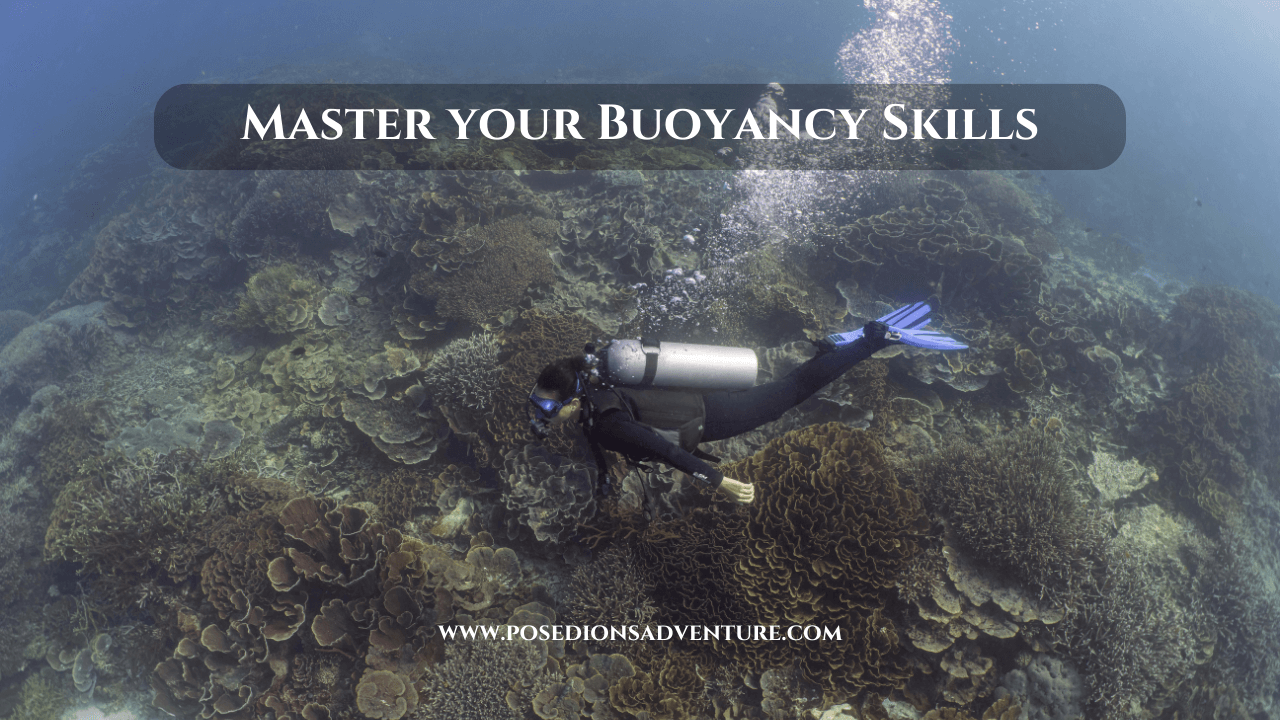
In scuba diving, we aim for what we call neutral buoyancy. This means that you neither sink nor float but hover in the water. This not only helps with the overall experience but also helps with your confidence as a diver.
When you master your Buoyancy skills, you become more confident in getting closer to the reef without worrying about you crashing into it, or kicking it.
Especially if you are into Underwater Photography or Underwater Videography, I can’t stress enough how important this skill is. Mastering your Buoyancy skills is a must before you even consider getting into underwater photography or videography.
So, what can I do to improve my Buoyancy Skills?
1. Master your Breathing:
- Focus on Slow, Deep, and Controlled breathing. Avoid rapid or shallow breaths, as they can lead to buoyancy fluctuations.
- Practice breathing exercises on the surface and underwater to develop better control over your respiratory rate.
Breathing is everything underwater, being calm and breathing properly will have a huge impact on your diving skills.
The more calm you are, the better your buoyancy and the better your air consumption will be. Remember to always breathe slowly, deeply, and continuously.
2. Use Your Lungs:
- Learn to use your lungs to fine-tune your buoyancy. Inhale to rise and exhale to descend gradually.
- Make small adjustments by controlling the volume of air in your lungs to maintain a neutral buoyancy.
Our lungs are literally floating devices, as we inhale and fill our lungs with air, we will rise, and as soon as we exhale and empty our lungs of air, we will sink. Use your lungs to help with your buoyancy.
That being said, remember the above and don’t hold your breath, as this will have a negative impact on your buoyancy.
3. Proper Weighting:
- Conduct a proper buoyancy check at the beginning of each dive to ensure you are correctly weighted.
- Avoid over-weighting, as it leads to excess use of your Buoyancy Control Device (BCD) and makes it challenging to achieve neutral buoyancy.
Having the correct amount of weight is as important as controlling your breathing. If you do not have enough weight, you will most likely start breathing heavily trying to get down and thus mess with your buoyancy, and the same if you are overweighted, you will not feel comfortable and this will affect your breathing.
That’s why the check dives are so important, as that is the time when we make sure that we have the correct weights for our current configuration.
4. Streamline Your Equipment:
- Keep your gear streamlined to minimize drag, which helps in achieving better balance and control.
- Tuck in hoses and secure loose items to your body to prevent them from creating unnecessary drag.
Equipment dangling around is not good for many reasons, like entanglement, but also affects your buoyancy skills. Making sure you streamline yourself will help with the overall underwater movements, minimizing the drag and preventing unwanted potential entanglements.
5. Perfect your Finning Technique:
- Use efficient finning techniques to move through the water with minimal effort.
- Practice the flutter kick and the frog kick to reduce disturbance to the environment.
A correct finning technique will not affect directly your buoyancy, but you will benefit from it. Having a proper finning technique will help you not disturb the environment and will give you confidence in moving around when close to the reefs. The frog kick is my favorite when diving near sandy or muddy bottoms.
6. Proper Body Position:
- Keep your body horizontal in the water to minimize resistance.
- Avoid a head-down or head-up position, as this can affect your trim and buoyancy.
When diving, you want to keep as close to a horizontal position as possible. Not only to help with your buoyancy but to keep your fins away from the bottom.
Keeping a horizontal position will help you spread the air inside your BCD equally throughout the surface of your back, this translates to helping you achieve a good trim and this directly affects your buoyancy. If you put yourself in a heads up feet-down position, like standing up, what will happen is that all that air will accumulate on your shoulders, and make you more prone to float up, to avoid this from happening refer to point number 3.
7. Practice Hovering:
- Spend time practicing a stationary hover in mid-water without touching the bottom or any objects.
- Use visual references and make small adjustments to your breathing to maintain a steady position.
Many divers struggle to keep static and still maintain a good buoyancy. This is mainly because when in motion, you can control your buoyancy with your fins as well, but when hovering all it counts is that perfect technique.
A way to master the hovering is to refer to the basics, points number 1 and 2, breathing is everything here, you want to add just enough air on your BCD to keep you off the bottom and then you control yourself with your breathing. Remember when you inhale you will rise, and when you exhale you will sink, so find a good balance on your breathing to keep you put on that hover position. It takes time to master this skill, so don’t get upset if you can’t master it at the beginning, keep practicing.
8. Visual Buoyancy Checkpoints:
- Establish visual references at different depths to help you maintain a consistent depth during the dive.
- Use natural features like rocks or the ocean floor to gauge your position.
Sometimes it’s difficult to know if we have a good buoyancy or not because underwater there are times that we don’t realize what our positions are, using visual references will help you understand your position and your buoyancy, you can also use your dive guide, or dive buddy, as a reference to see if you are rising or sinking too much.
Another way to control this is by monitoring your dive computer, especially when swimming in blue water without any reference at all, your dive computer is your best friend to keep you at the correct depth.
9. Stay Relaxed:
- Tension and anxiety can affect buoyancy control. Stay calm and relaxed throughout the dive.
- Relax your body, especially your legs, to avoid unintentional movements.
This is the end part after we have practiced all the above, once you get here you will see that all that practice makes sense, staying relaxed will not only benefit your buoyancy but will improve your air consumption and your overall experience.
A way to understand why being relaxed is so important is to think about how you act on land when you are all in tension and nervous about something, you make erratic and unintentional movements. If you feel this is happening, the best thing to do is to just stop for a second, take a deep breath, calm yourself down a bit, and focus on your breathing again, this will help you get back to your relaxed state.
10. Continuous Training:
- Regularly practice buoyancy skills in controlled environments.
- Consider taking advanced buoyancy control courses to refine your skills further.
As I said at the beginning, buoyancy skills come with practice, practice, and practice. As with many things in life, the more hours you put into this skill the better you are going to get, you can not expect to have excellent buoyancy right away so do not get upset if it takes time to master it. Even we, Instructors, went through that period as well, so keep practicing and you will master your buoyancy skills in no time!
If you want to have extra training, there are specialties about Buoyancy skills, or you can just talk to your instructor and ask to make a dive focused on buoyancy practice only to help you improve.
There are many other factors that may affect your buoyancy, but the ones mentioned above will help you to improve your buoyancy skills. My recommendation is to ask your instructor to keep an eye on you and correct you during the dive, as sometimes is a bit difficult to gauge by ourselves if we are keeping a good buoyancy or not. At the end of the day, we instructors, want our students to be the best divers out there, it makes us proud to see you improve and perfect your skills, so don’t be shy to ask us about tips and tricks to help improve your skills!
By incorporating these tips into your diving routine and consistently practicing buoyancy control, you’ll likely see significant improvement over time. Remember that buoyancy is a skill that develops with experience, so be patient and stay committed to refining your technique.
I hope this helps you understand a bit more why Buoyancy skills are so important and how can you improve and practice to master them. If this is something that you have enjoyed reading and want me to write about some other very useful tips to master other skills, make sure you put down in the comments which skill you struggle with the most so I can write about it next! For now, remember to get out there and practice, practice, practice until you become a master at Buoyancy!
If you have any other questions regarding this topic, make sure to drop a comment in the comment section down below, and I will get back to you as soon as I can!
Thank you for stopping by, and as usual
I’ll see you all in the Blue!
Join my community and discover beautiful ocean stories