
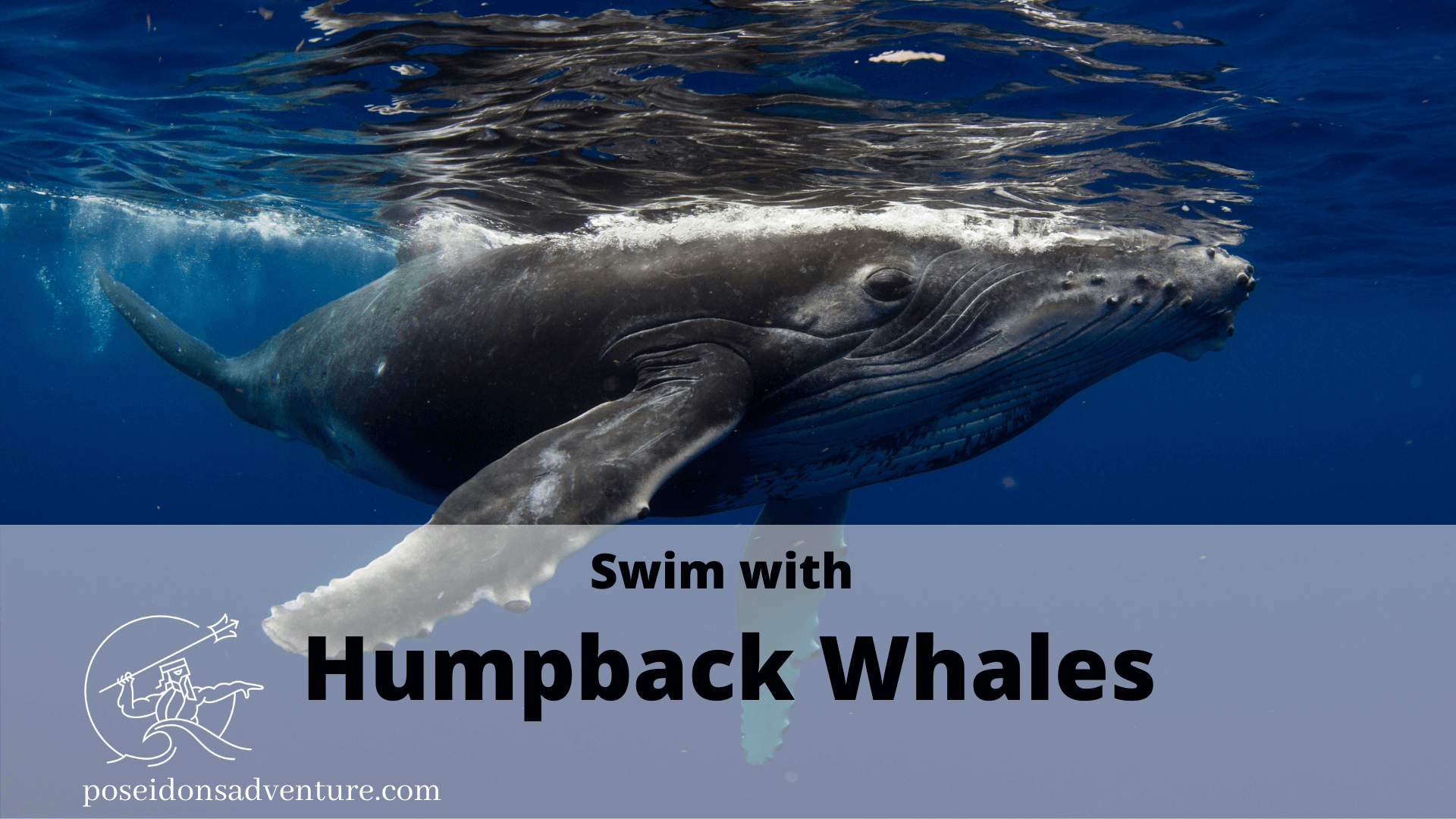
What is really like to Swim with Humpback whales?
Definitely a unique experience, that if you have the chance, it is a must do!
I was lucky enough to be able to be in the water with this gentle giants while on a expedition trip through French Polynesia.
There, we came across quite a few whales, but we were only able to swim with humpback whales a handful of times.
The main reason being that this animals, although being huge, can reach up to 16 meters or 50 feet!, are really fast, and when on the move, really difficult to get on a good position to see them properly.
So we had to wait until we found a friendly mum and Calf, relaxing on the shallow waters, or semi-adult whales sleeping in the atoll lagoons, before e could have an epic interaction.
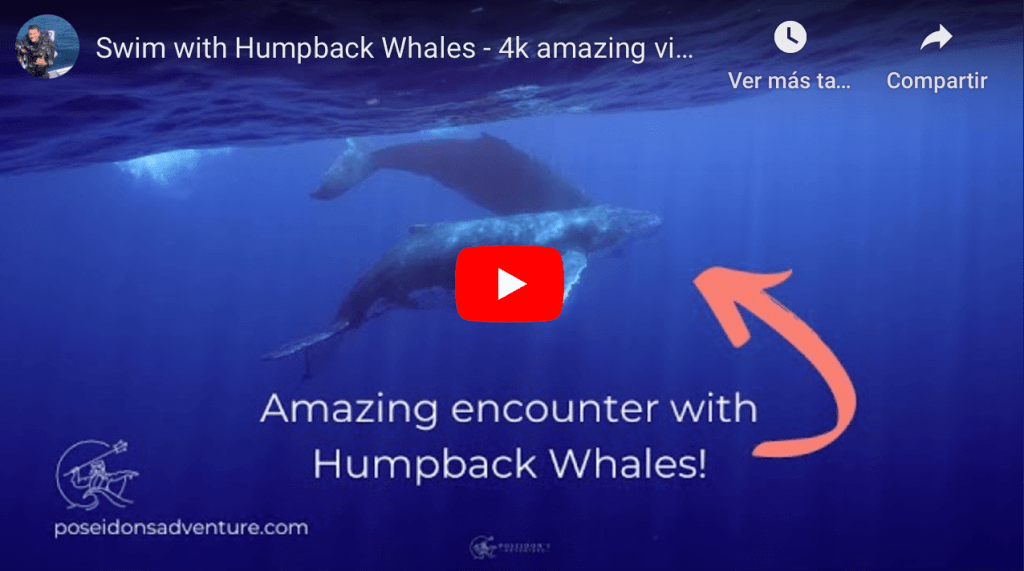
Where can you swim with humpback whales?
Well there are a lot of places around the world where you can have incredible experiences and interactions with this beautiful animals.
I’ve seen them on many locations throughout all my years of sailing. Caribbean (Dominican Republic), Eastern tropical pacific (Colombia, Panama, Costa Rica, Ecuador, Mexico, California…) and in the South Pacific (French Polynesia, Cook Islands, Fiji and New Zealand).
But always seen them from the boats, I’ve never been able to jump in with them, due to being on duty or rough seas or because the whale where literally racing through the ocean!
Is it safe to swim with humpback whales?
It is totally safe as long as you follow the instructions of an expert, or your tour operator.
You must understand that this animals are really big and powerful, and although they may look angelical, can really hurt you if we have a wrong behavior while interacting with them.
A rule of thumb is to always keep a safe distance, this will be dictated by professionals of the specific region you are on.
Your vessel will most likely stop at a maximum of 100 meters or 330 feet, then your group together with the guide enter the water.
Here you will swim into the caution zone and approach to about 30 meter, 100 feet, distance from the whale and wait for her to make the move.
Usually what we look for is a sleeping whale, a relaxed mum and calf or a playful individual.
Once we are close enough then we wait, hopefully the whale will get interested by us and will please us with a close swim right in from of us!
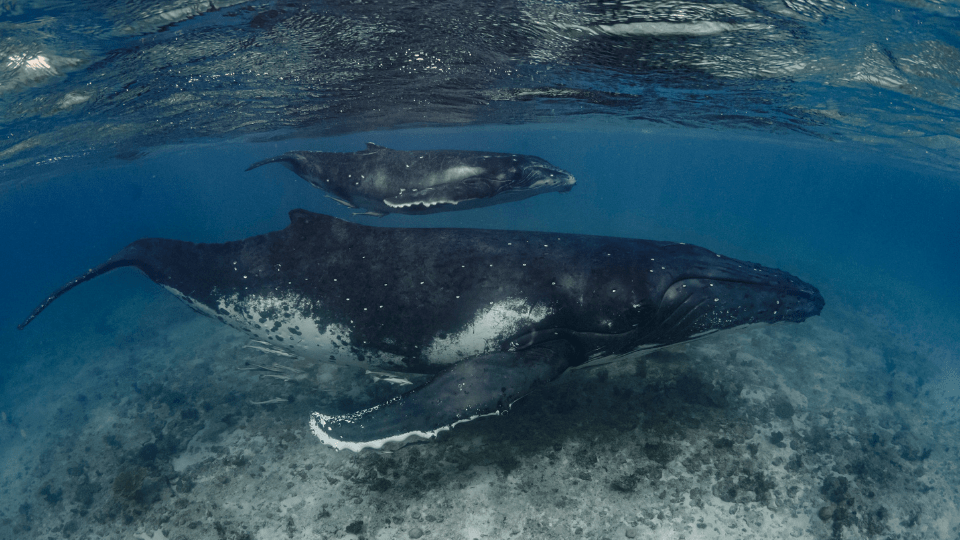
Unless you swim towards the whale, or right in front of her, dangerous move, then there’s nothing to worry about, since they are very conscious of their surroundings and will most likely turn before they get to close.
But do never swim in front of a whales paths when on the move, or chase it as this can be dangerous for you.
Once the interaction is finished then we will swim back to the boat and hope to have another epic encounter!
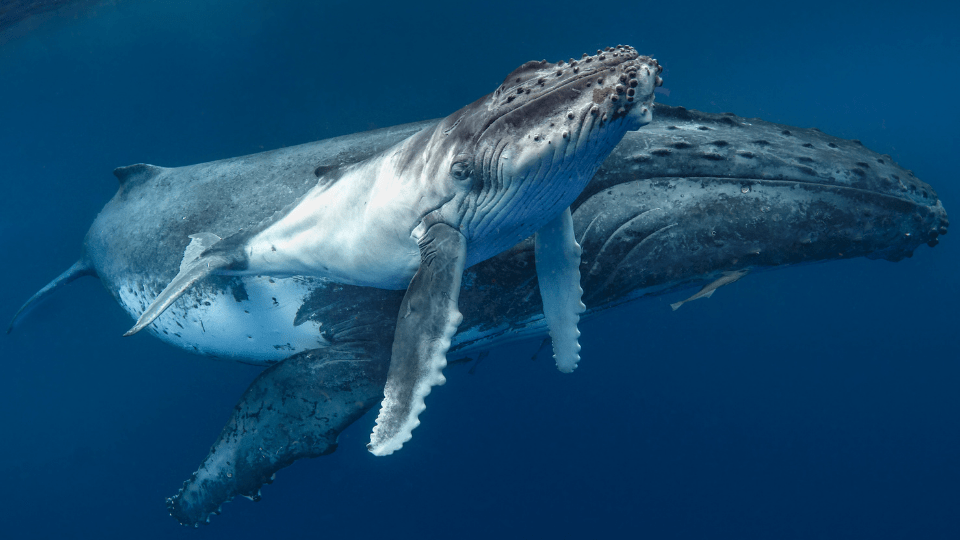
Is it warranted to swim with humpback whales?
Unfortunately this is something that can never be for granted, since we are going out at sea, to look for wild animals, who, in that specific day, may not be in the mood to see humans around. Or maybe they are focused on playing around instead of relaxing.
So It all depends on the whales mostly, if they want then we will have the interaction, if not, will have t come back another day.
Also we will have to deal with the weather, as you may understand we can not go in the water in any weather conditions, so the skipper and guide of your tour will make the call on whether it is safe for us to go in or not on that specific day.
Where is the best place to swim with humpback whales and when is the best time?
As I said for me it was in French Polynesia. I was lucky enough to swim with them around Moorea, Tahiti and in the the atoll of the Tuamotus.
But as said previously there are a lot of locations where it is possible to interact with Humpback whales, and those locations have different seasons for them.
South Pacific:
Specially Tonga and French Polynesia, from August to early October is usually when you have the best chance to find them, although the season officially starts in late June and finishes in late November.
Eastern Pacific:
Colombia and Costa Rica follow a very similar season as in the South Pacific,
Mexico, Hawaii and Californian Coast, from January to late April, again, you might get some whales earlier or later depending of the year.
St. Lawrence Marine Park in Quebec, probably one of the most impressive places since you can see them on feeding frenzies, not swimming with them here. June to September for the best whale watching opportunities.
But there is lots more, such as South Africa, Greenland, Iceland, Australia, New Zealand, Alaska, Antartica and many others.
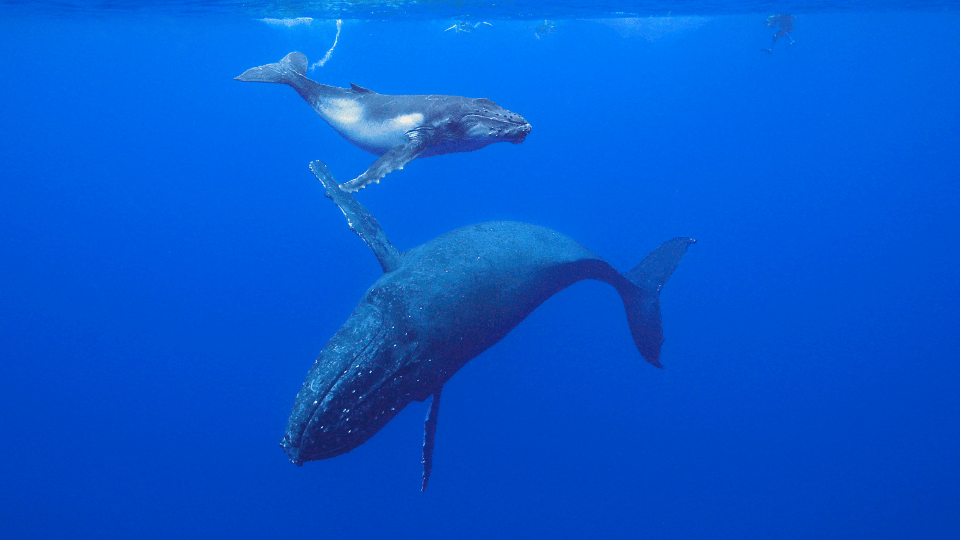
To be able to Swim with Humpback whales its definitely something that you will never forget, an experience that you must have to really understand how beautiful and delicate this animals are.
And above all, to be able to connect with them and really see why we need to protect them.
Whale fishing has been happening for many many years. Humpback whales where fished to almost extinction back in the 50s. With only a few hundreds left.
It was only after their protection came in place in the late 60s that they had the chance to recover, and luckily, come back in strong numbers.
But still to this day, the population haven’t reached the numbers of their ancestor populations.
Hope this made you want to swim with Humpback whales, and to her protect this beautiful animals along the way.