

Have you ever dreamed to see the last living Dragons? Then you need to visit the Komodo National Park!
The Komodo National Park is located within the Lesser Sunda Islands, in the border region between the provinces of East Nusa Tenggara (NTT) and West Nusa Tenggara (NTB), Indonesia.
The National park includes the three major islands of Komodo, Rinca and Padar, and it completes the national park engulfing another 26 smaller islands with a total area of 1,733 km2 , of which 603 km2 of it is Dragon land.
The park was founded in the 1980s to protect the Komodo Drangons and other species, including its marine habitants.
Later in 1991 the park was declared a UNESCO world heritage site. A true gem that definitely needs this protection.
Komodo National Park has been selected as one of the New 7 wonders of Nature.
The waters surrounding Komodo National Park contain an incredibly rich marine biodiversity. Komodo islands is also a part of the Coral Triangle, which contains some of the richest marine biodiversity on Earth.
That is why this place is so magical.
The Diving:
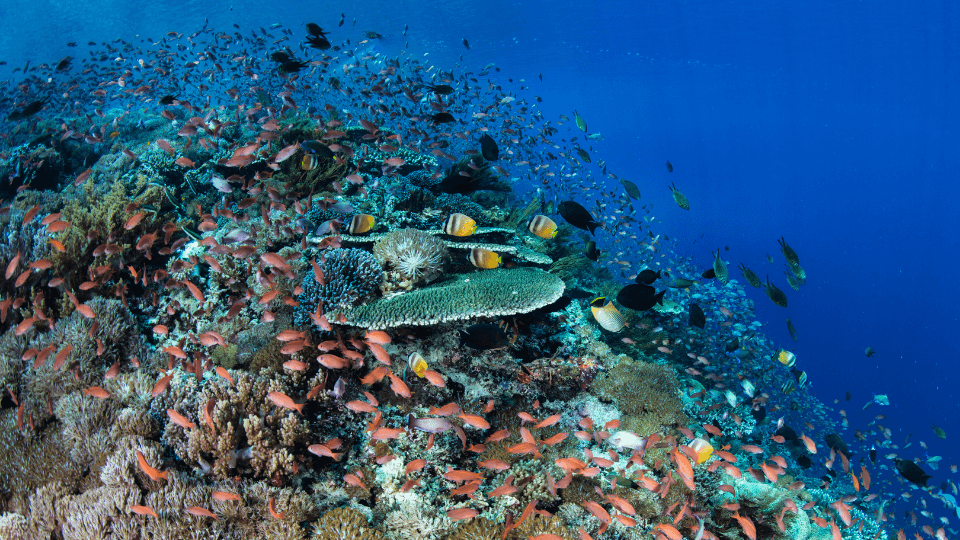
Diving around Komodo National Park is some of the best you can experience.
With an incredible variety of dive sites, here, you can see pretty much everything and anything.
From super exciting drift dives, to diving in sea mounts thriving with marine life, to beautiful reef slopes, coming across a Manta Train, to being able to experience some of the best Muck diving there is in Indonesia.
Komodo National Park has it all.
That being said, some of its dive sites can be quite challenging, such as the world famous Batu Bolong. A sharp and skinny sea mount rising from around 130 meters deep (425 feet) all the way up to 3 meters above the surface. This is one of the best dive sites, but, it can be one of the most challenging ones too.
Currents swipe this rock which is located in the middle of the Lintah Strait, and a fair amount of knowledge of this area is needed before planning to dive here.
But as in many other dive sites around Komodo, if dived properly, this can easily be one of the best dives you have ever done!
Coming across clouds of Anthias, beautiful hard corals, white tip reef sharks, Napoleon wrasses and many many others.
Near by, a famous Manta point known as Takat Makassar, or Makassar Reef, hosts the beautiful Manta rays, although we can find them in many other dive sites, here the sightings are more consistent as this is used as a cleaning station by the manta rays.
If you are lucky enough to match your trip around the full moon, then you might be able to witness the Manta trains, or larger aggregations of manta rays. Definitely something very difficult to forget!
Water temperatures:
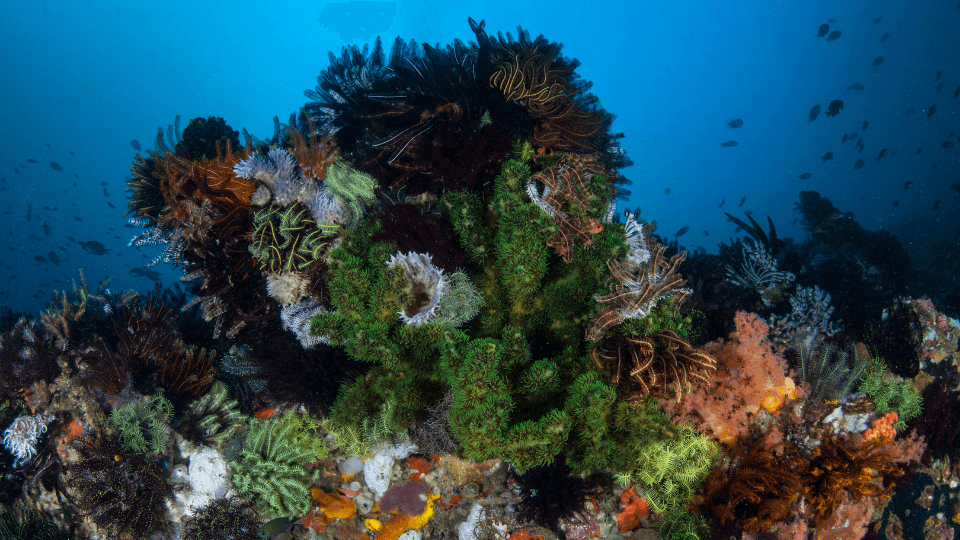
Komodo National Park has a very different water temperature from North to South.
During the dry season, between April and December, the north side has the warmer waters, temperature can fluctuate between 24 and 28 degrees Celsius (75 to 83 Fahrenheit), and an overall good visibility although this is not always the case.
Whereas the South side, during this time of the year, has the colder waters, ranging between 24 and 17 degrees Celsius (75 to 63). And during this months of the year the visibility will be on an average of 10 meters (30 feet) or less.
Even though the south might not sound very appealing, it is probably my favorite part of the National Park. Extremely colorful and full of life, here is where you get the best surprises!
Hosting world class dive sites such as Manta Alley, Cannibal Rock, Torpedo alley, German flag and many others. The south is definitely one of the highlights of Komodo National Park.
Land activities:
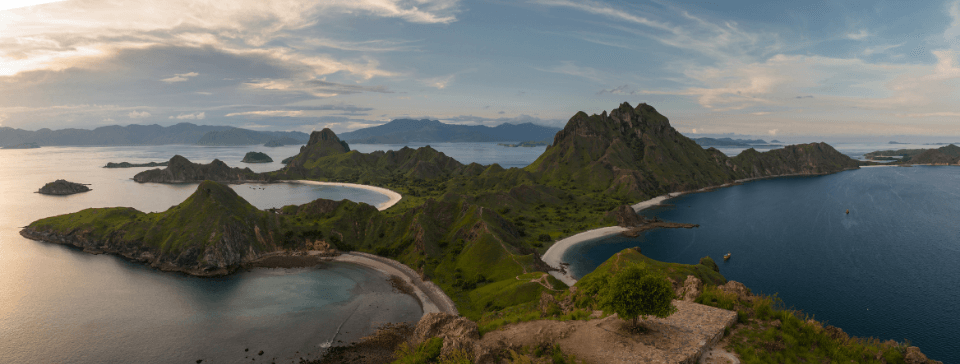
If you like to see the Komodo dragons, there are a few places where you can go.
The main spots are either in Komodo or in Rinca Island. Here is where we will find the main ranger stations, and where we will have professional guides taking us through the bushes on a search for the Dragons!
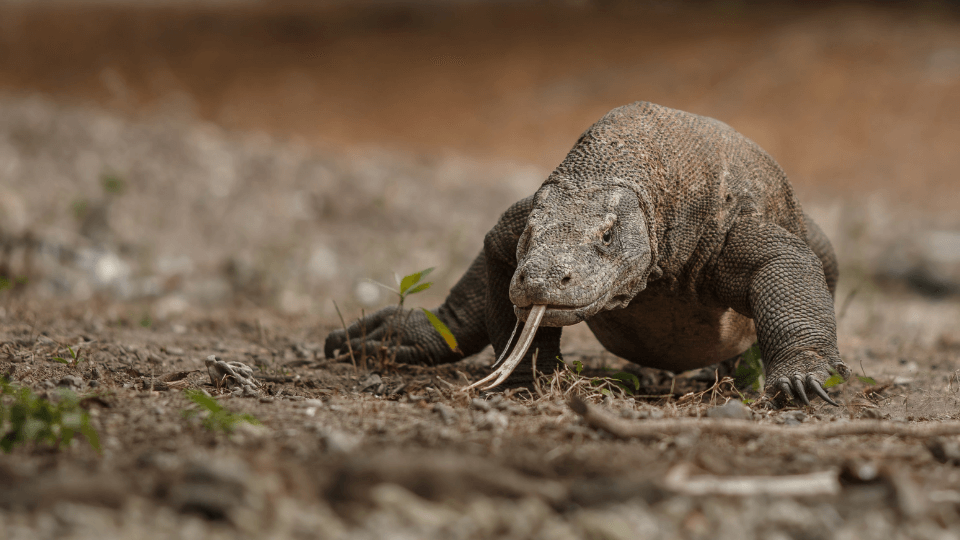
During the months of May and August is the mating season for the Komodo dragons, so your chances of encountering large individuals, or a few of them, is greater during this period.
After august, the big females will leave to find a place where to nest and rest for a while, making it a little bit more complicated to see them.
Either way, there is always a few individuals around the ranger stations, so you have to be very unlucky to not see one of this amazing creatures!
And if you visit with a liveaboard, you might have the chance to see them in a beach too!
Komodo dragons, are they dangerous?
Yes, you shouldn’t venture or wonder off by yourself in neither of this two islands.
Komodo dragons can be quite aggressive if disturbed, specially during mating season or if there is some food around. So stick with your guide and follow their instructions.
There has been a few accidents in the past, so no need to take your chance here.
When is the best time to dive in Komodo National Park?

For me, I really enjoy the months of May-June, as its when the season is changing, and there is a lot of fish aggregations In many dive sites.
During July to mid September, we could say that is the busiest period through the park, as many divers come to dive during this months. Also this time of the year is when the visibility is better and more consistent through the north side of the park.
This is also one of the windiest times of the year.
Then mid September to October, is again when seasons change, the south side starts to warm up and all the green water starts becoming blue. I really love this time of the year as it makes this place even more magical.
Usually winds drop down, seas are flat and fish seems to be all over the place again. Not many divers around either. So perfect timing to explore this beautiful part of the world.
How do I get there?
You have a few options here, my recommendation I to use a Liveaboard, this way you will be able to dive north and south. Dive centers only dive north side.
Also it is more comfortable time wise as you make the most of your day out here and get to see places that otherwise wouldn’t be possible.
Liveaboards usually depart from Labuan bajo, in Flores Island. Bima, in Sumabwa Island. And there some such as Mermaid Live aboard that make their trip from and back to Bali.
If you decide that you want to be on a resort, meaning land based. Then your options are more limited.
Most of the resorts are based near Labuan Bajo, in Flores Island. And some others are based on the islands offshore near the national park.
They will offer diving packages that usually include two dives a day, departing in the morning and coming back after lunch.
Here the choice s yours to decide what fits best your budget.
So… Would you recommend diving in Komodo National Park?
Do I even need to answer this question? Haha
Yes!! Definitely!! You will not regret it and it will surely be one of the best trips to date!
I worked for 4 seasons there, and I’ve never got tired of diving through this beautiful place.
And having the chance to see the last living dragons in our planet, plus, world class diving and breathtaking scenery I think its a good enough reason to plan a trip to Komodo National Park.