

Do you know about this amazing Island Nation? Today we talk about the Republic of Palau and its amazing waters.
I had heard of the Republic of Palau but never had the chance to go there myself until December 2023 thanks to a collaboration with The Ark Team. Today I will share with you my full experience, from getting there, where to stay, how to move around, costs, and of course diving spots.
Palau is an Island country in the Micronesia subregion of Oceania in the Western Pacific.
The Republic of Palau consists of approximately 340 islands and connects the western chain of the Caroline Islands with parts of the Federated States of Micronesia. It has a total area of 466 square kilometers (180 sq mi), making it one of the smallest countries in the world.
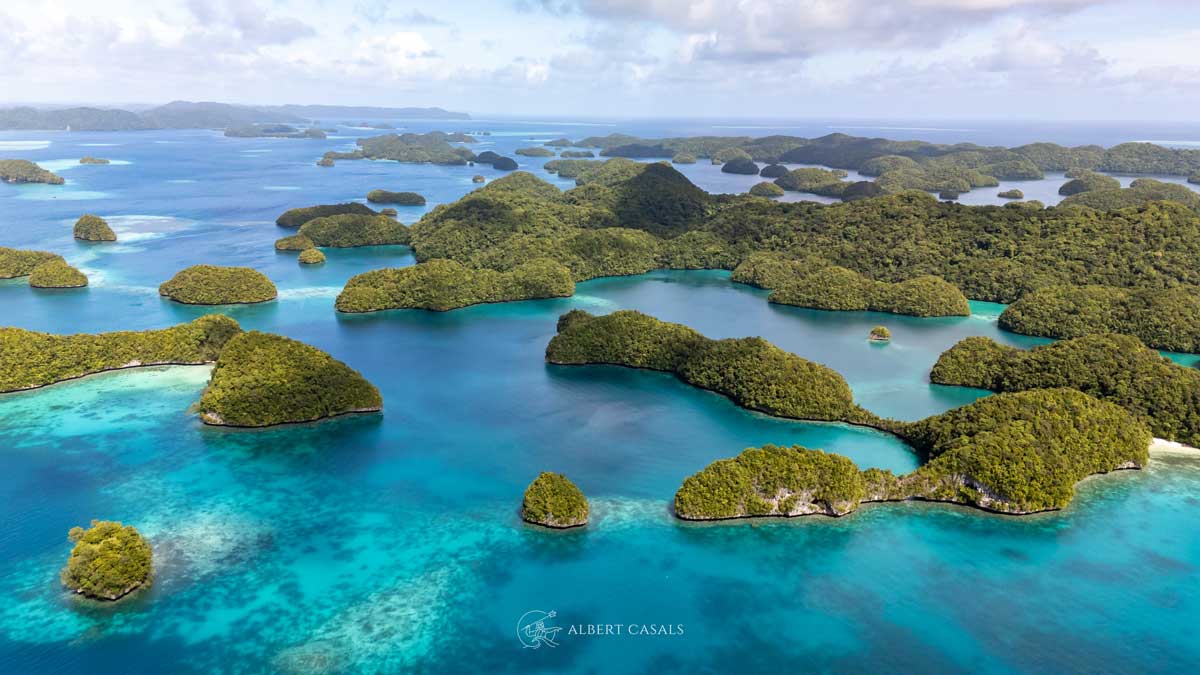
The most populous island is Koror, home to the country’s most populous city of the same name. Palau shares maritime boundaries with international waters to the north, the Federated States of Micronesia to the east, Indonesia to the south, and the Philippines to the northwest.
Did you know that the Republic of Palau created the world’s first so-called “shark sanctuary” on September 25, 2009?
Palau forbids all commercial shark fishing within its Exclusive Economic Zone (EEZ) waters. The sanctuary protects about 600,000 square kilometers (230,000 sq mi) of ocean, an area similar to the country of France. And since then is home to 135 endangered or vulnerable shark and ray species. Many countries followed their lead and I hope many others will join soon!
My experience there was pretty amazing, I didn’t have many expectations but it exceeded all of them.
Palau and its Rock islands reminded me of my time living in Indonesia, especially Raja Amat, as both share the same limestone formations, and beautiful lagoons, and with that all the incredible soft corals and sea fans clinging from their beautiful walls. Truly an incredible diving destination!
So let’s dive into the important stuff:
How to get here?
You have a few options depending on where you are traveling from.
- If traveling from the USA you can either fly via Guam or the Philippines.
- If traveling from Australia you have a direct flight from Brisbane, and you can go through Port Moresby, Papua New Guinea as well.
- If traveling from Europe you can fly into Manila in the Philippines, Singapore, and Taiwan depending on your preferred Airline choice.
That being said, there are only a handful of Airlines flying into Palau, and they only have scheduled flights a couple of days a week at the most, so make sure to check with your travel agent about flight schedules before you proceed with any booking in the islands.
As for me, I flew from Barcelona, Spain, via Germany and then directly to Taiwan with China Airlines. After a 6-hour layover in Taiwan, I took the last flight towards my final destination, Palau!
The 30-hour-plus flight became completely worth it as soon as I had a glimpse of this incredible place!
Regarding Visas, I didn’t need any as my European passport granted me a free 30-day visa which was granted on arrival. But do check before you travel if you need a visa.
On arrival, we had transport arranged by the company we were diving with, Neco Marine, but there are plenty of taxis that can take you to your hotel/resort from the Airport. Although I would recommend having that arranged with your accommodation so you do not have to worry about this on arrival after a long flight journey.
Where to stay?
We stayed at Palau Pacific Resort, which is located on a beautiful piece of land, surrounded by an incredible lush forest and with a private beach.
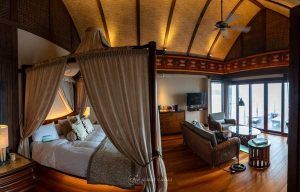
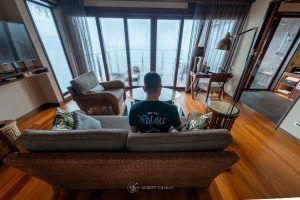
The only downside of this resort is that it is a bit far from everything, although we had no problems at all when going for dinner in town since many of the restaurants offer pick-up and drop-off service.
But there are plenty of options to stay in Palau, from homestays to Luxury resorts and of course Dive liveaboards.
Diving
Ok, let’s dive into the very important stuff, how is the diving in Palau?
First of all, diving here is amazing! But why did I go diving here?
Well, The Ark Team invited me over to do a video collaboration with them during this trip to Palau, and they had arranged all the diving with Neco Marine, so we were picked up every day at the resort, the first day with van to set up all the gear and finish paperwork at the office, and from the second day onwards their boat picked us up at the Palau Pacific Resort private Jetty.
Depending on the diving location we would get picked up between 6 am and 8 am, and would be out for 3 dives every day.
Our day out would start with a 30 to 40-minute commute boat ride to the diving area, We would then do 2 dives after which we would head to a nice beach, or some days stay on the boat, to have lunch and rest a bit before heading for the last dive of the day. After that, the commute back to the resort was due.
All in all the boat trips were quite comfortable, we had really good weather throughout the days we were out diving, and even when going to Peleliu which was over an hour boat ride, we had very smooth seas all the way.
So which were my favorite dive sites?
-
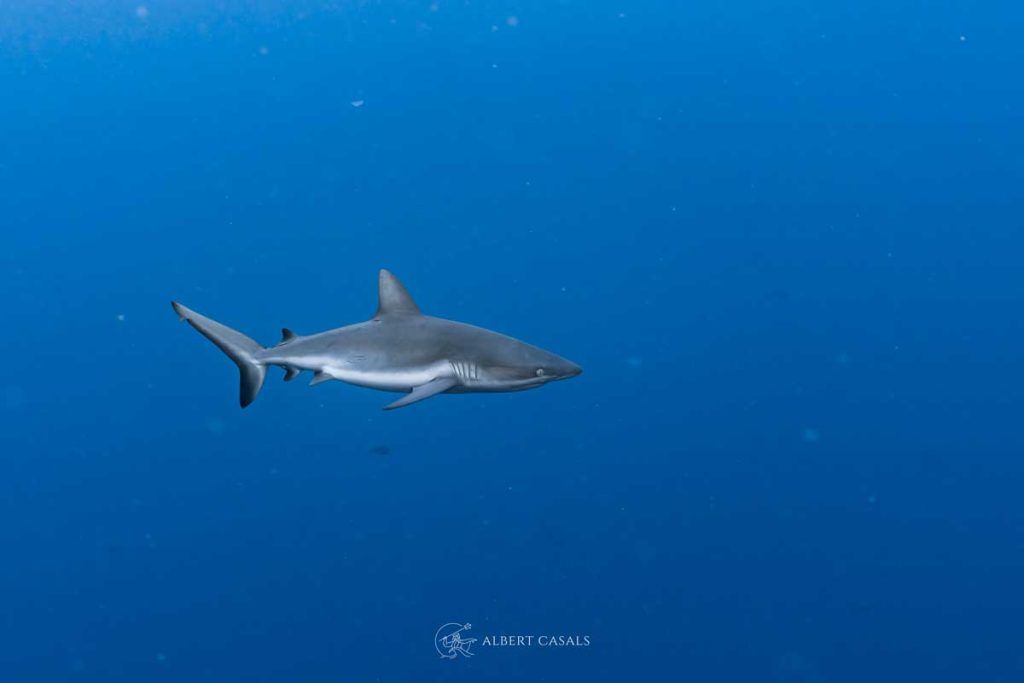
Blue Corner – Obviously one, if not The One, of the most famous dive sites of Palau, I have to say that the very first dive there wasn’t that good, didn’t see much and we got dropped on the wrong side so we had to fight against the current pretty much the whole dive. But we did dive this spot a few times and every dive from there got better and better! Grey reef sharks patrolling the reef, white tip reef sharks napping on the bottom, schools of fish everywhere, eagle rays, big schools of Barracudas and big-eye trevally, Napoleon wrasses, and beautiful soft corals to name a few are aplenty here! The visibility is pretty incredible here, the water has that pristine blue color that makes you feel that you are flying instead of diving.
-
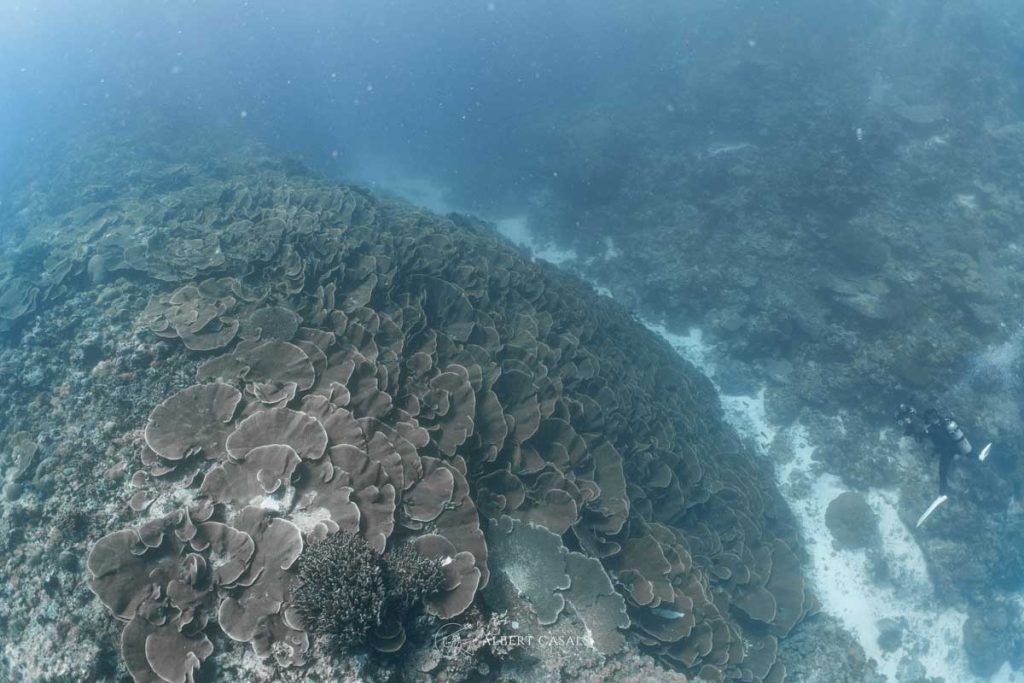
Ulong Channel – Incredible coral growth along this channel, the cabbage inside the pass is the biggest one I have ever seen! Hard and soft corals grow everywhere and the amount of fish and sharks at the mouth of the channel is astonishing! Saw plenty of turtles and schooling fish outside and inside the channel, many gray reef sharks and white tip reef sharks as well. Word of caution if you come during the full moon, it is a minefield of Triggerfish! The Ark Team timed this trip so we could witness the Bumphead Parrotfish spawning which happens near Ulong Channel during every Full Moon, of course, they are not the only ones spawning, so be mindful of your surroundings when diving during this period as triggerfish won’t doubt to deter any intruder in their territory!
-
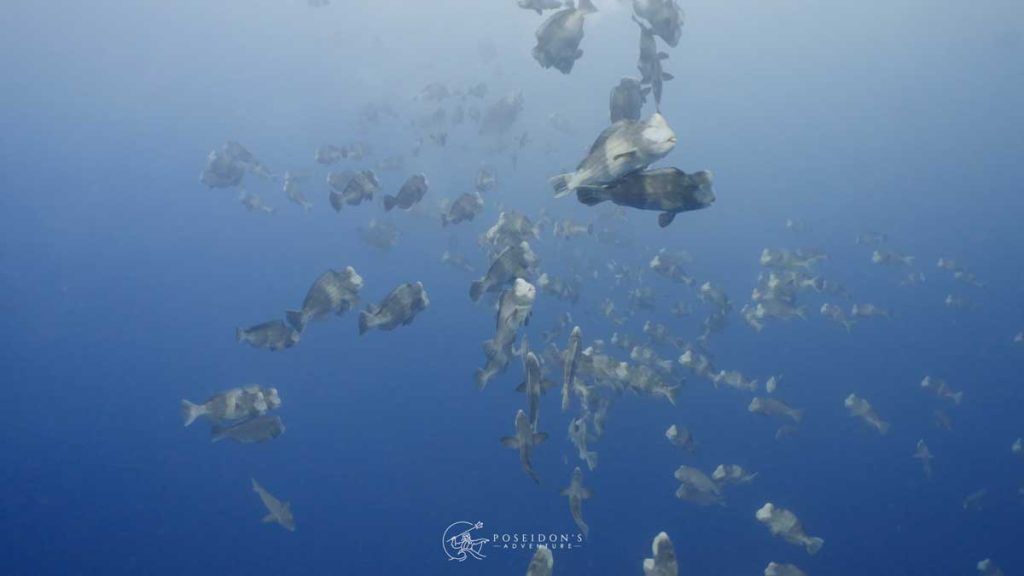
Bump Head Parrotfish Spawning – What an incredible experience that was! This is the biggest aggregation of Bump Head Parrotfish ever recorded, they gather at this spot during every Full Moon to mate and spawn. The downside is that this has become a very popular attraction, so be ready to share the dive not only with thousands of fish but with many divers as well. Here is where having a good and experienced dive guide pays off big time since they know the patterns of these spawning and will take you to a less busy spot where sooner or later you will have the spawning happening in front of you. My tip here is to stick to one spot and not chase the fish around, you will be in the blue at about 10 to 15 meters deep, 30 to 50 feet, keep an eye on your guide as they will try to be on the best spot and be ready to take in this incredible experience!
-
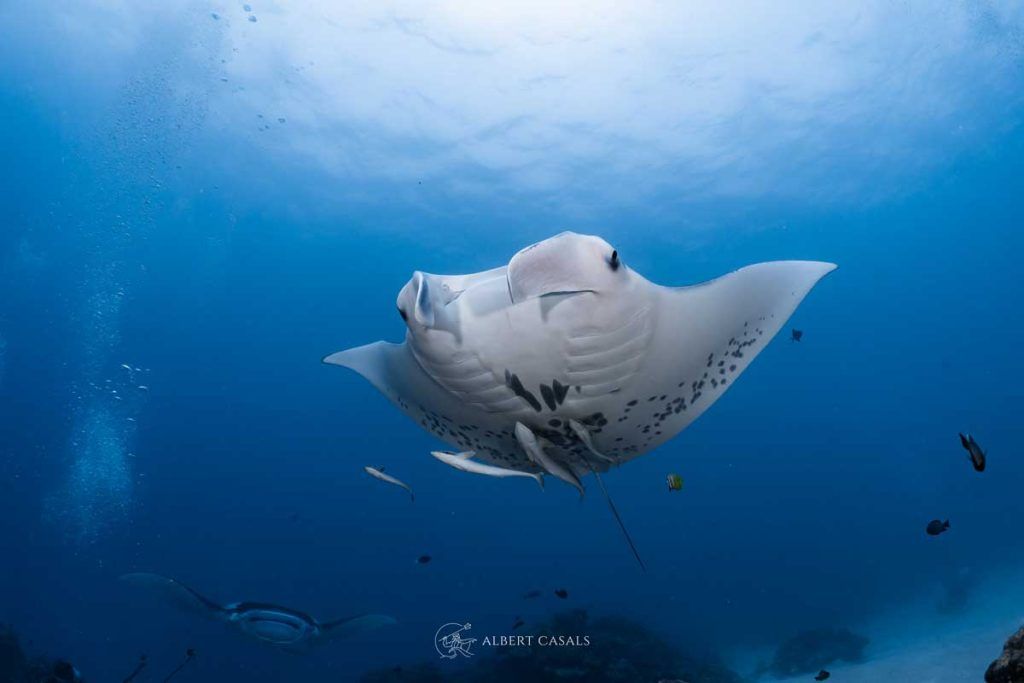
German Channel – What to say about this spot? This is where many Manta Rays gather to get cleaned and also to feed, the dive site itself is really pretty with a white sandy bottom and beautiful coral bommies all around, and if you add manta rays on top, it makes for an incredible dive! We were quite lucky with the manta sights, but the highlight was the last day, when we did our second dive here and our dive guide decided to try something different, right at the end of the dive, before we started to shallow up he spotted something on the sandy bottom below, excitedly called us up and we came face to face with a beautiful Leopard Shark! What an incredible encounter to top this dive off!
-
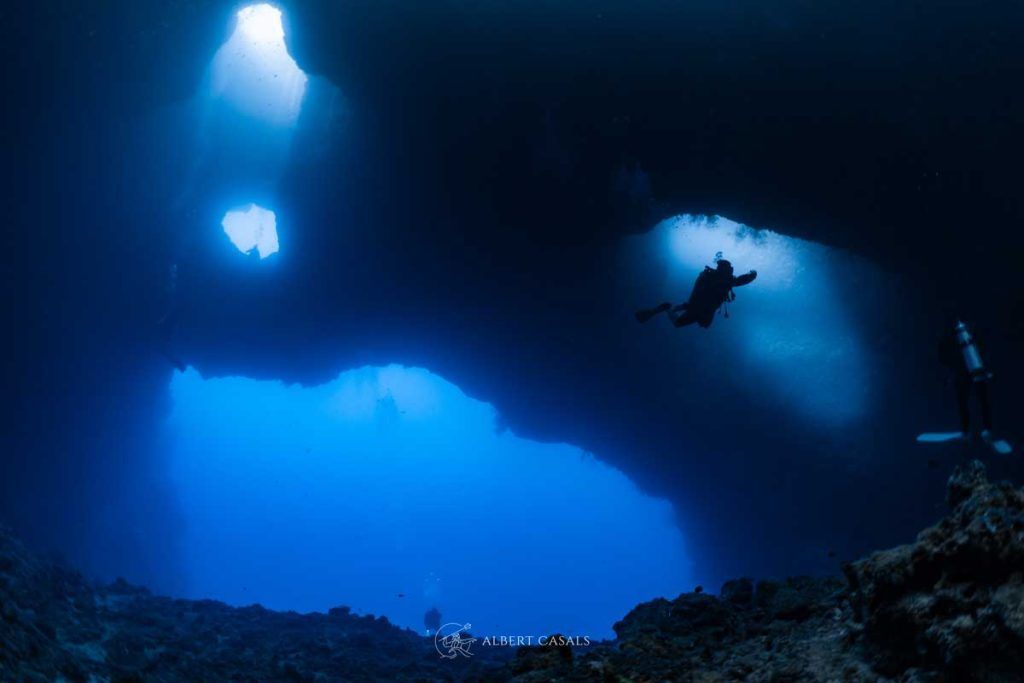
Blue Holes – This dive site is very close to Blue Corner you can dive both if the current is right. The highlight of this dive site is the cuts on the reef top, which are at 2 meters, 6 feet, deep, and descend into this cavern-like opening stretching from 26 to 42 m, 85-140 feet, deep. There is also a window of 5 m, 15 feet, in diameter at 17 m, 55 feet, deep which is an alternative way to swim out. The light inside this cavern is incredible, although there isn’t much fish life to see inside, the light is so good that I stayed almost the whole dive here.
-
Peleliu Wall – Probably the most exciting dive spot we visited in the whole trip, currents were quite hectic here but it was really fun to fly through the sites. Out of the three dives we did at Peleiu, Peleiu Wall was the most beautiful of them all. An incredible drop filled with yellow soft corals, overhangs, amazing sea fan, and soft coral growth all along. Fish life was really good and I even got a chunky Bullshark that appeared out of nowhere and instead of grabbing a photo I just admired how beautiful this shark was. All in all, Peleiu is worth the trip and all experienced divers should aim to dive it when visiting the Republic of Palau!

-
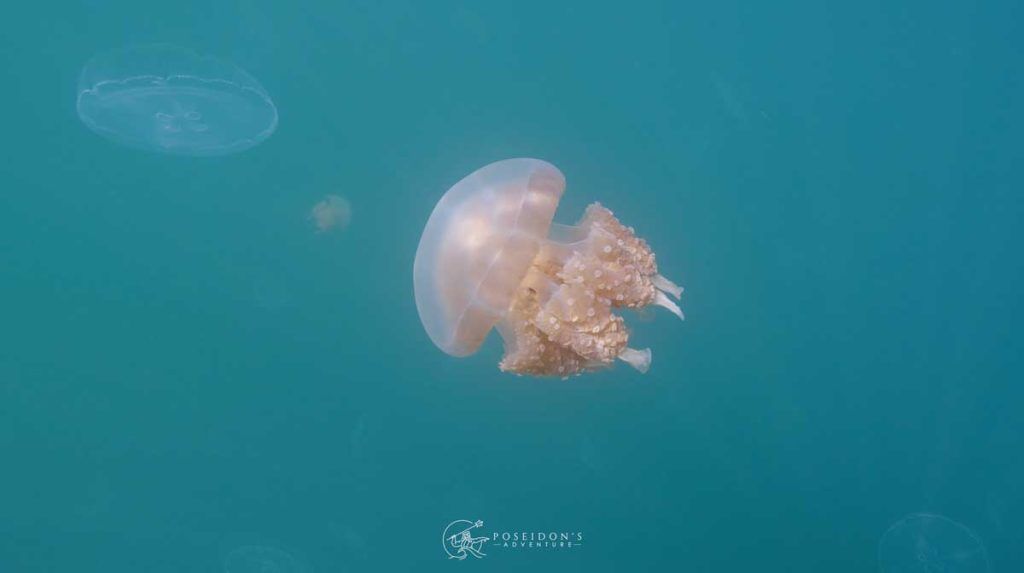
Jellyfish Lake – This is also one of the main attractions to Palau, unfortunately, there was a massive Golden jellyfish die-off back in 2016 due to a severe drought and an increase in salinity of the saltwater lake, due to the ocean’s warming weather pattern which is commonly known as El Niño. Ever since the population hasn’t come back to what it was, so you still see some, but nothing like it used to be. Just so you are aware of that and that you don’t get disappointed when you visit the lake, which is worth visiting!
The water temperature has an average of 27 degrees Celsius, 82 Fahrenheit, a 3mm wetsuit will be enough for most of you. When I was there the water temperature was 30 degrees Celsius, 86 Fahrenheit, so I dived mostly with a rash guard.
As mentioned above, we stayed at a Resort, from which we did all our diving outings, and although it was great since we could visit all the spots in Palau, I think that if you are used to diving from Liveaboards, or want to do a more diving focused trip, then you should consider joining one of the liveaboards here.
As you might know, when diving from a liveaboard you have more flexibility with the timings, instead of showing up and having to dive with whatever conditions there are, and you can deal better with the crowds from other dive operators.
That being said, Neco Marine did a fantastic job getting us to the spots, timing for the best conditions, and guiding us down there, if you visit them make sure to say hi to the crew from me and try to dive with Clayton!
Recommendations and Other Information
Some items that I highly recommend you take on this trip are:
-
Reef Hook – You are going to use it quite a few times and you will regret not taking one. Although your dive operator might be able to supply one for you or sell it to you, do not take your chances of being left without one.
-
SMB – Surface Marker Buoy should always be in your dive gear packing list, but here in Palau make sure you take one with you, and better if it’s one of the sealed ones like this one. Due to the currents here, it is recommended that all divers have their SMB for safety purposes. If you don’t know how to use it, or never used it, make sure to ask your guide to show you how it works.
-
Windproof Jacket – If you are staying land-based, as mentioned above the boat rides are quite long, so a windproof jacket will make these commutes much more pleasant, as most of the dive boats are open and wind, splashes, and rain will affect during these rides.
-
Reef Safe Sunscreen – If you don’t know yet how bad normal sunscreen is for the reefs you might want to research that online. From now on whenever you go to a place where there are coral reefs please make sure to use reef-safe sunscreens if going in the water.
-
Dive equipment – Even though you can rent all the gear with the dive operator of your choice, it is always better to bring your own, at the very least your own dive computer and mask. If you are investing in such a trip, why take the chance of having a gear malfunction during a dive? Make sure to check your gear at home before joining a diving trip.
The Republic of Palau works with the US Dollar as the main currency, Card payment is widely available on the Island but it’s always a good idea to bring some cash with you, for the little souvenir shopping and tipping.
Palau uses as a standard the wall Plug A and B, which is the same as the USA, and with this a current of 110 Volts. So if you are coming from Europe or any other country with a different plug, make sure to bring your adapters to be able to charge your batteries.
What if I want to fly a Drone?
Then you will have to apply for a permit to be able to fly. This permit is free of charge and it takes about 2 or 3 working days to process, make sure to do this in advance in case the approval gets delayed. Also, inform yourself about the rules and regulations and the restricted areas to fly. You can apply for a permit by following this link.

So how do I rate Palau as a diving destination?
A top destination that should be on every diver’s bucket list! Diving here is superb, it has a great mix of what you can see in the South Pacific like pelagic action and amazing blue water visibility, but also the soft corals, lagoons, and mangrove habitats from the coral triangle, which gives Palau an incredible diversity underwater.
One of the most amazing things is how well the locals have studied the Spawning of certain species, which allows you to witness an incredible event that not many have seen before. From Coral spawns to Parrot fishes, Sanppers, Moorish idols, and many others!
Coral reefs are incredibly healthy with what seemed a very good balanced fish-to-predator ratio, which in many other countries is unfortunately not the case.
Palau, being a shark sanctuary for many years, really shows how the protection of these species can healthily balance an ecosystem, I wish other countries could see this as an example and protect their waters against overfishing, and thus, help the oceans recover to what they were.
After having dived into many incredible destinations, I think Palau has made its way up into my top 10 diving destinations. And I can not wait to get back there sometime soon!
Lastly, I want to thank the guys from The Ark Team for the invite to join them on this incredible trip to Palau, this was without a doubt one of the best diving trips of 2023, and I am very grateful that they trusted me to join them and cooperate on making this collaboration happen. If you like to know more about them, you can check their website by following this link, and their social media is pretty awesome too so make sure to check them out there as well!