

Ahhh the Galapagos Islands, where to start!
This is definitely one of the most spectacular and diverse destinations I have visited so far during all my diving career, an incredibly unique place where endemic species thrive under and above the water, and where predators and prey share some of the most rich habitats in the world. It feels like the time stopped at Galapagos Islands, and you can witness how the world was hundreds of years ago!
My experience in Galapagos Islands
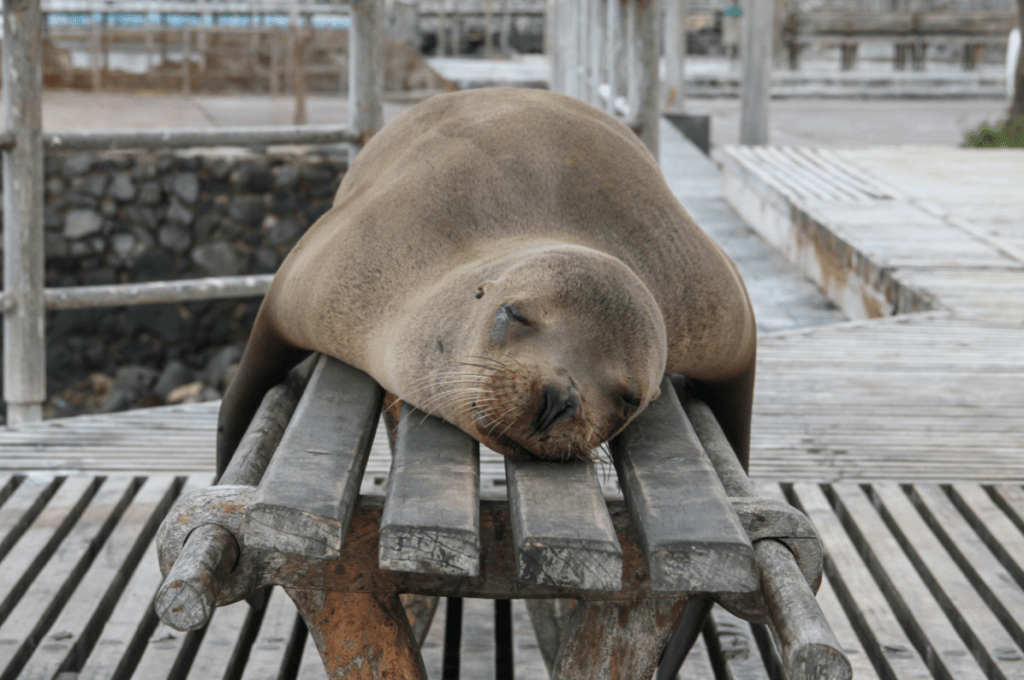
I started my trip in Puerto Ayora, in Santa Cruz Island, where I already had the chance to see some marine iguanas swimming in the near harbour waters and sun bathing in the breakwaters, and where the endemic Galapagos sea Lions have taken over this beautiful town. They own almost all the benches near the harbour! As that’s their favourite spot for some midday siesta, I guess they learnt that well from the Spanish…
Quite a nice thing to do is to visit the local Fish Market where the Sea Lions are waiting to sneak on the fisherman to grab a quick snack before anyone can see them.
After heading out of Puerto Ayora, my first stop was in the near Baltra Island, in the north side of Santa Cruz. Here’s where my underwater adventure starts, we gear up and head out towards a little island called Mosquera, where we will spend the first day of diving. I was super exited to, at last, be able to jump into the infamous Galapagos waters and start exploring this amazing place, but, I was not ready for the water temperature to be that low! At the bottom we reached as low as 19 degrees Celsius, but with all the action that was happening in front of my eyes I soon forgot about it. The first day was already pretty special since we saw a few different species of Sharks, turtles, Spotted Eagle Rays, schooling fish and went to visit a Galapagos sea lion Colony during the surface interval. That wasgreat, there where some big adult females which kept some distance, but the little pups they where very curious so we had an amazing interaction with them playing and swimming with the little guys for over an hour! So not too bad for the first day in Galapagos!
We started then cruising in and around this incredible chain of islands, which will ultimately lead us to the world famous Wolf and Darwin Islands.
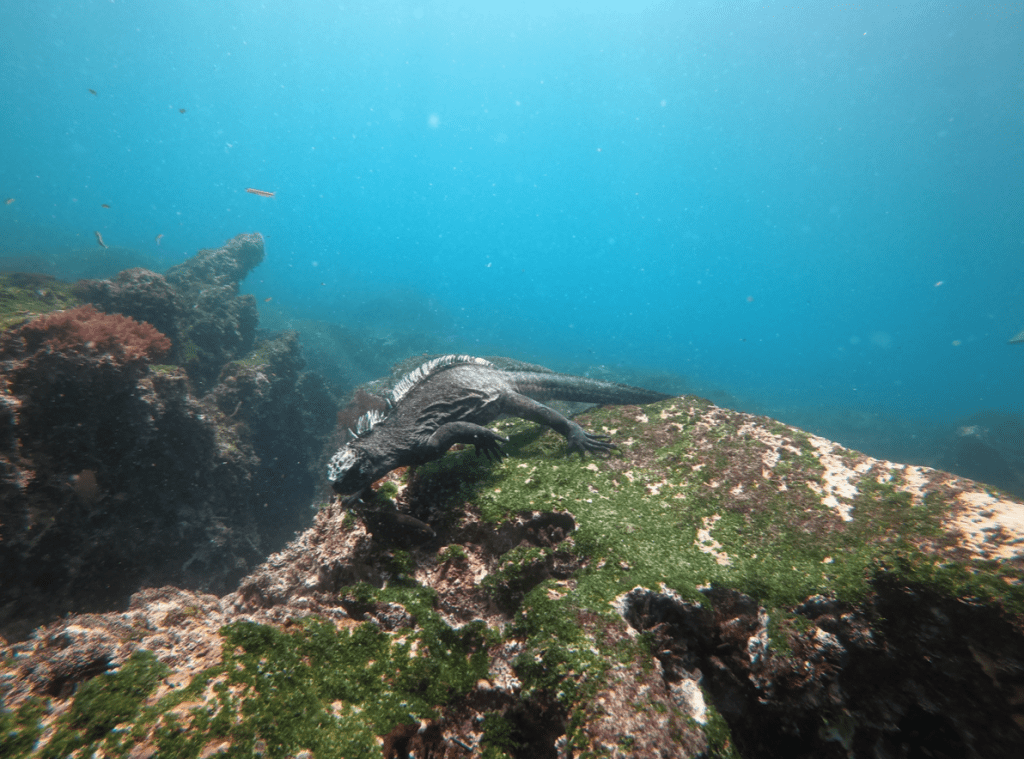
But before we got there, I had the chance to explore quite a few different habitats and had the chance to learn which kind of marine life can be found in the Galapagos waters. With us we had two highly experienced local Dive Guides / Rangers, Jeffry and Walter, who showed us all the wonders that Galapagos has to offer. From the oceanic manta rays in the west coast of Isabela Island, the volcanic activity under Roca Redonda, where you can see the sulphur bubbles coming out of the seafloor, the red-lipped Batfish in Isla Pinzon and the incredible Marine Iguanas we swam with in Cabo Douglas out of Fernandina Island. Let me tell you that just for the chance of seeing this reptiles swimming around and looking for food under the sea the trip was totally worth it! My ultimate highlight!
And then we finally wake up in a half moon shaped bay, with thousands of booby birds flying over us and nesting up high on top of those incredibly high cliffs. We made it to Wolf Island! Here is where the big boys were awaiting for us. And I couldn’t wait to get in the water!
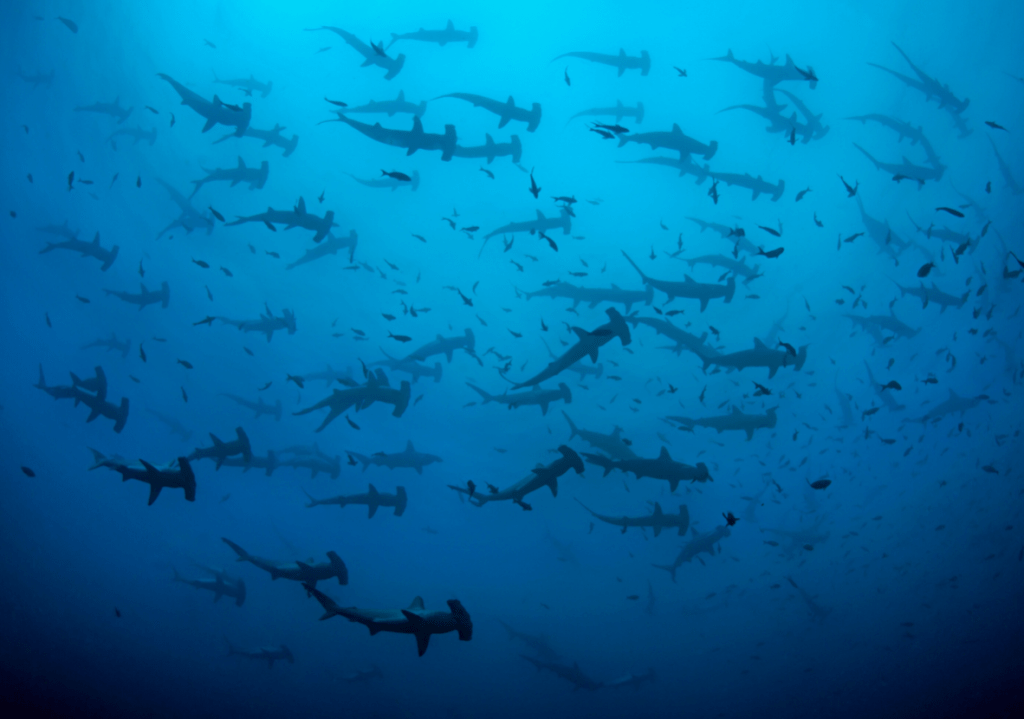
The first dive is at Landslide. Pretty quiet at the beginning but as soon as we drop down a bit deeper and catch the current along the reef slope, our guides start pointing out into the blue, “What is it? Galapagos shark?” Shortly after I realised that that’s a big Scalloped Hammerhead shark! Oh wait! There’s more coming! And before we knew there it was, what everyone says about Wolf and Darwin islands, the schools of HammerHead Sharks Woah! Such an incredible feeling to be able to swim side by side with hundreds of sharks!
After that adrenalin rushed dive we repeated the experience in Shark Bay and the Caves where Galapagos sharks, Hammer Heads, Spotted Eagle rays and even the rare Galapagos Fur Seals share the same habitat trying to keep their spot in the food chain.
Next morning we stat moving very early, and when the sun rised it came clear in front of our eyes, we arrived to Darwin Island! Darwins arch was waiting for us, we where lucky enough to be the only boat there so we had the dive site all for our selves!
You realise real quick why this Dive Site is always on top of everyones list, I have never seen that many fish, sharks, dolphins and others together sharing the same bit of water! The Biomass of this place is incredible!
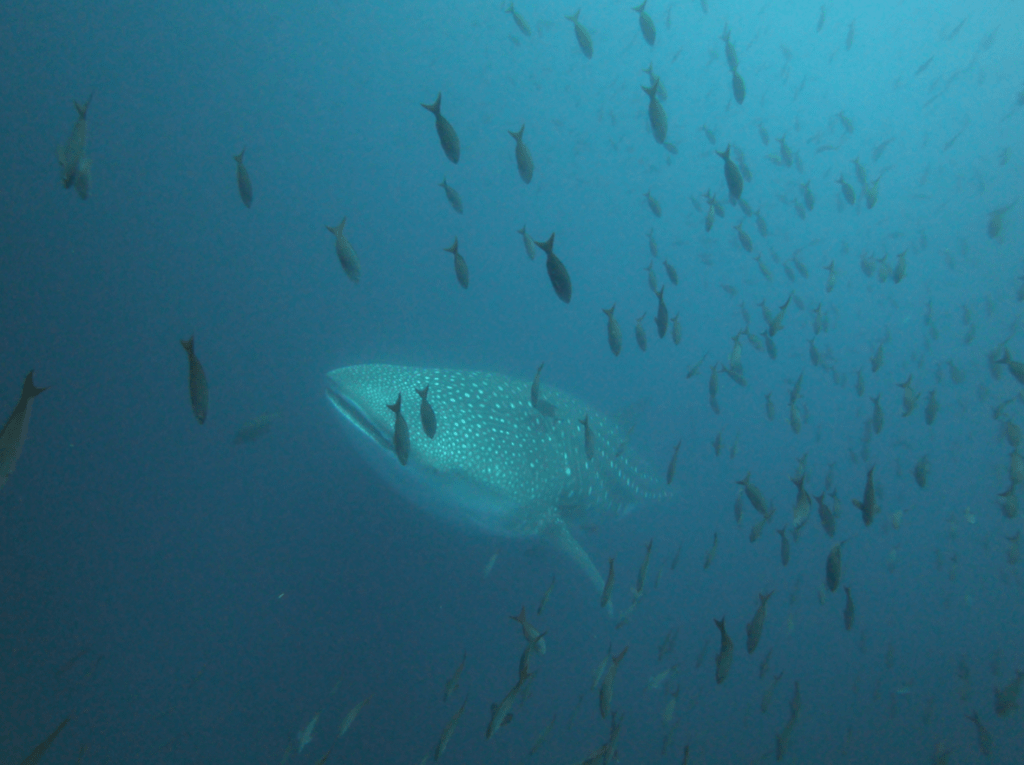
And if that wasn’t enough, our guides suddenly shoot out towards the blue, “what’s going on?”, we were a bit confused at the beginning but soon we realised what was happening, a huge Whaleshark was coming from the blue! I have seen many whale sharks during my diving career, but I have never seen ones the size of a school Bus! We were extremely lucky since we saw them on every dive there! Some dives there where multiple individuals!
Our guides told us that the scientist are trying to find out if they are coming here to give birth, since 95% of the individuals they see are adult females, and they are quite sure that they are pregnant!
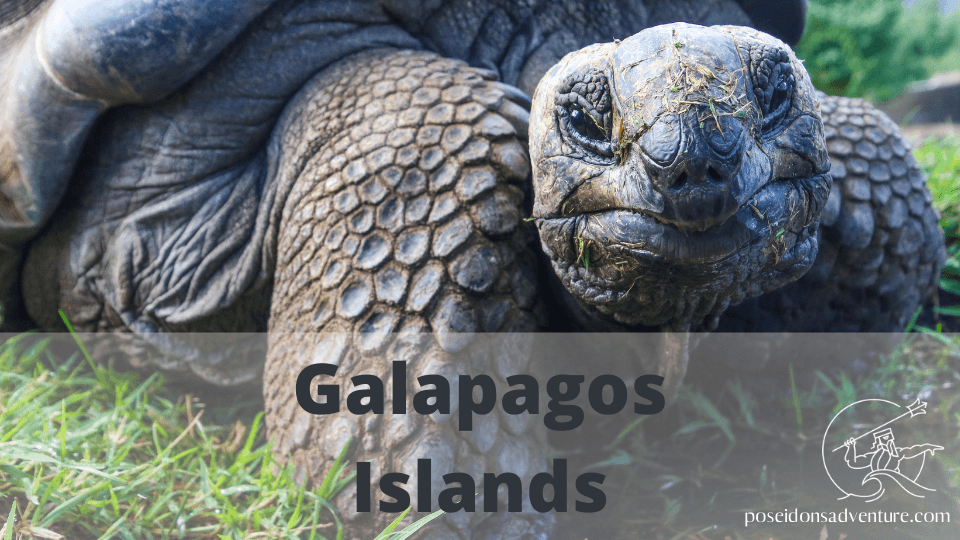
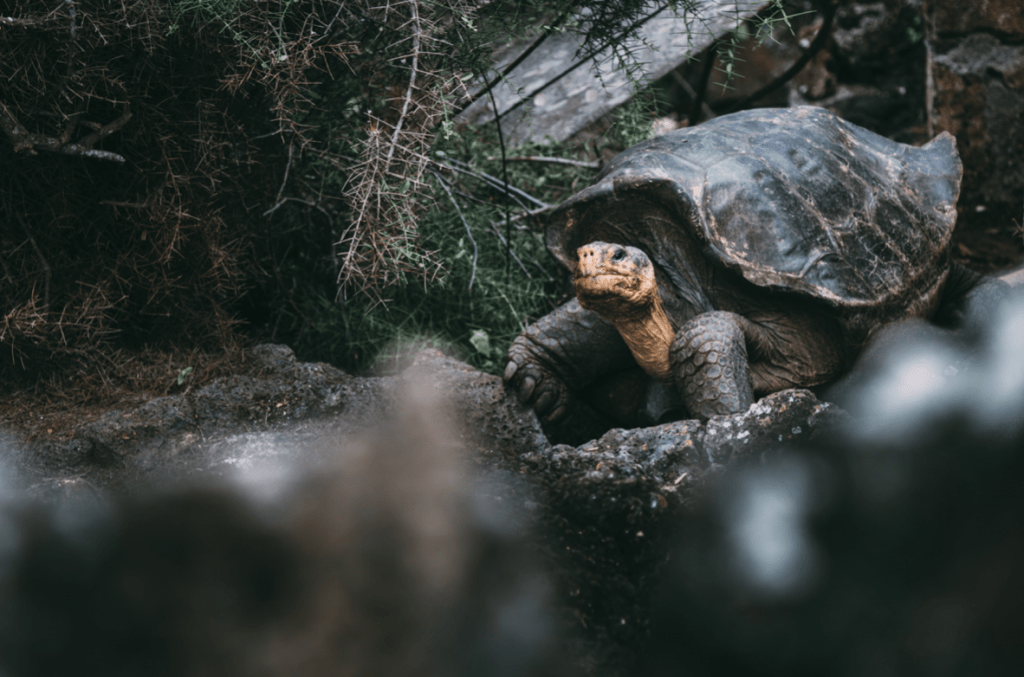
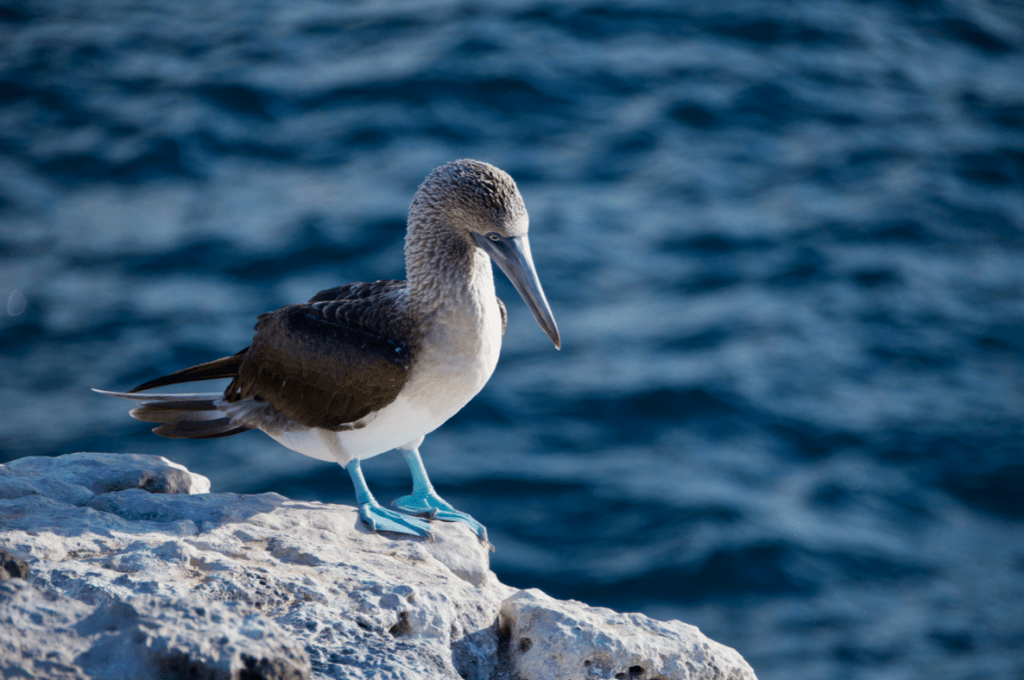
After the incredible time we had in the north of the Galapagos it was time to come back down and finish our trip. We stopped at other islands on the way back, did some land excursions (Really recommended!) were we saw Galapagos tortoises, Penguins, more Marine Iguanas and blue footed boobies colonies amongst others. After an epic 10 days we finally arrived to Puerto Ayora, where everything started. I can’t believe it went so fast!!
I have to say that this trip was something else. Due to the incredible Biomass of the area, the different habitats, the shark biomass! And the amount of endemic species that you can see here, this is a place where if you have the chance, you have to go to at least once in your life. I loved every minute of this adventure and if I have the chance I will definitely come back!
Tips for your Galapagos Islands trip:
-
When to go?
We can dive at Galapagos all year round, but there are two main seasons: the Whale shark season (June to November) with colder waters and drier days, and Manta Season (December to May) when it’s slightly warmer, calmer seas and some rainy days. With that in mind you can plan your trip accordingly to your expectations, but remember: that’s only an approximate, seasons change back and forth from year to year, and you might be lucky to see whale sharks or manta rays out of their season too!
-
Best way to visit?
If you like to experience the whole archipelago you will have to do it on a Liveaboard boat, since there are islands such as Wolf and Darwin which can only be reached by boat. Most of the central islands can be reached by day trip boat or you can do island hoping, but you will get a better overall experience with a live aboard trip.
-
What to bring for land excursions?
You will need long clothes (there is a lot of spiky bushes), preferably hiking boots since there are a few islands where you will be able to walk through dry lava (very sharp!), hat and sunglasses, binoculars if you want to have a better bird watching experience and of course a camera!!
-
Dive equipment:
On the liveaboards and dive centres you will be able to rent al the dive gear if requested in advance but I recommend you bring your own since you are already used to it. Wetsuits its a big thing here, since there are two different seasons, I will recommend a 7mm for the colder season (June to November) and a 5mm for the warmer season (December to May), and take a 3mm for Wolf and Darwin since water its usually a bit warmer up there. If you usually dive in a Drysuit its also a good option since it can be a bit windy and chilli out of the water.
-
Interacting with wildlife:
As you know the Galapagos its well protected all around so the best thing to do its to follow the instructions of your rangers/guides to be able to enjoy the wildlife at its best. They will do their best to show you as many species as possible, but we need to respect their rules to not disturb the wildlife here. The biggest asset of this reserve is that they try not to affect the day to day activities of the species that live in and around the islands, so they keep coming back and making this wonderful place their home.

One Response
Very nice! Thanks!