


Lets learn together what are the main Coral Bleaching causes.
Coral Bleaching is a real problem and it’s happening every day in our oceans.
Due to climate change, our oceans are warming up quicker by the year and this is stressing our coral reefs around the world.
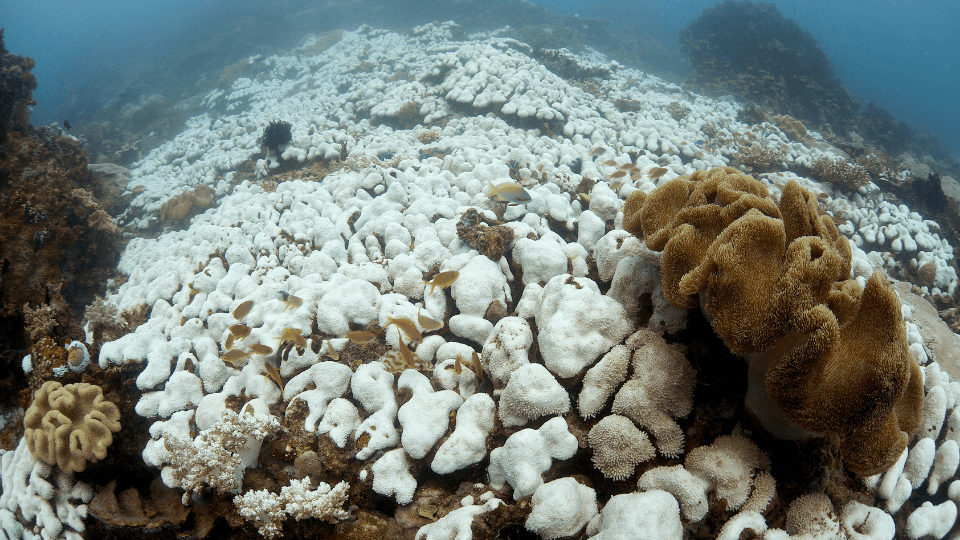
Coral bleaching happens when the sea temperature rises above the maximum corals are used to, for a period of time, usually two weeks or longer.
What happens is that, the warmer water stresses the corals out, and forces them to release the zooxanthellae, the algae they have over their exoskeleton, and use to convert the sun light into productive energy.
When this happens the corals are not dead, but under a high level of stress. They can recover from a bleaching event, but the time frame between recovering or going downhill is very narrow.
After they lose the zooxanthellae, the corals turn completely white.
This gives other algae the chance to settle on the corals, this is the bad algae, the one that suffocates the corals.
Corals can’t get rid of this algae on their own. It algae suffocates them, leaving only a skeleton behind.
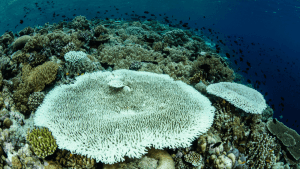
It all comes tight together, corals losing the zooxanthellae, algae overgrowth, small fish losing their habitat and leaving the dying reef, no Blenny, Tangs or other algae eating species coming over…
All it remains is a dead reef after a few weeks.
So what is causing coral bleaching?
Mainly is due to a change on the average Temperature of the water where those specific corals live.
A change as small as of 2 degrees Fahrenheit, or 1 degree Celsius, can trigger a bleaching event.
Overfishing can cause an increase in zooplankton, which can create an oxygen starvation event in a specific area. Resulting in a tipping point for a Bleaching event.
Increased sedimentation, due to constructions near the coastline, making runoffs more frequent when big rains hit the area. Those brining a lot of silt into the reefs. Silt sit on top of the corals, and stops the production of food and energy they need to survive.
Ocean Acidification, caused due to high level of CO2 we have in our planet.
Cyanide fishing, sunscreens, herbicides and many others can be the tipping point to trigger a bleaching event.
Why should we be worried about coral bleaching?
Coral bleaching matters a lot for us. When a reef goes through a bleaching event, it rarely recovers. Most of the times only a few corals will recover, and those few have a really hard time to reproduce and repopulate the area.
This jeopardize the reef ecosystem, and with it, many marine species. From the smallest of fish to sharks, turtles, manta rays and even cetaceans. If the small fish is not there, then the food chain breaks out. As reefs collapse, already at-risk species may face extinction.
This also affects human lives, as many people depends on healthy reefs to get their resources and daily incomes.
Corals reefs also act as a barrier for when the seas are rough, breaking down the waves before they reach the shore.
Basically, Coral reefs are like the rainforest of the seas. Without them, our seas can not survive, and this, will affect all of us.
So how can I help?
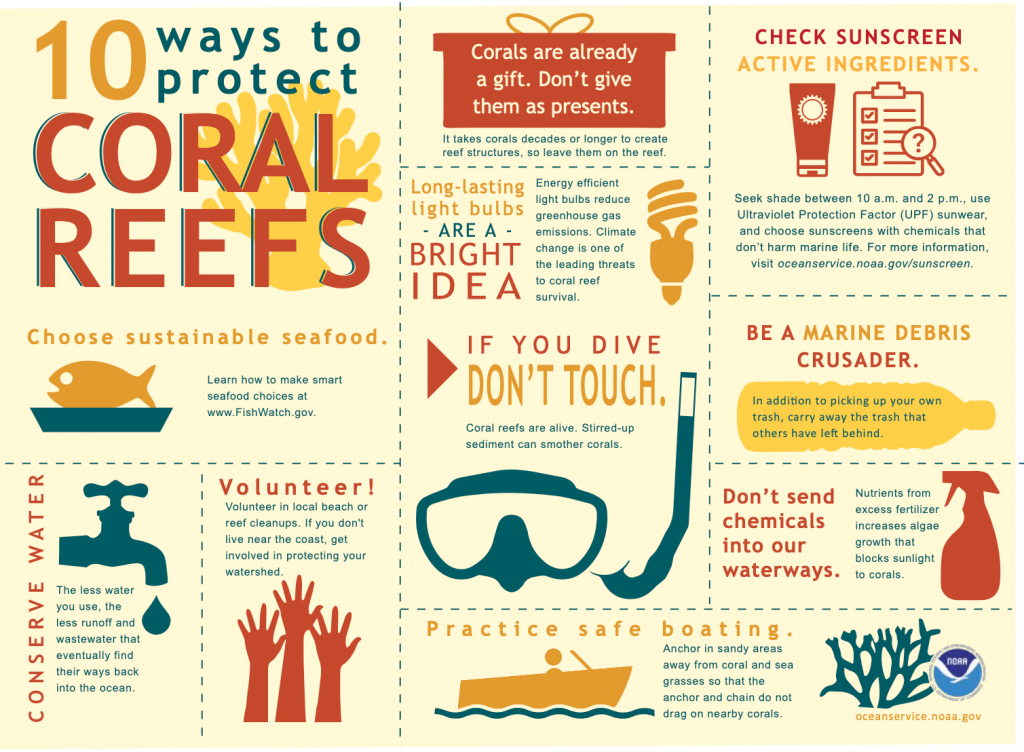
Small actions on your day to day lifestyle can help protecting our reefs.
Conserve water.
Choose sustainable sea food when going shopping.
Do not touch or take any corals when you go to the beach.
Check sunscreen active ingredients, and choose a coral friendly one.
Be more thoughtful of rubbish near the sea, and try to recycle everything when possible.
You can also volunteer with some NGOs to help with this problems, and this way you can even learn more of the coral bleaching causes in your area, and take direct action to help solve the problem!
What would you rather see when you go next to the beach? A healthy full of life reef? Or an empty, dead, coral reef?
Join many others, and lets work together to a better ocean for the future generations!
Let me know down below what is the best reef you have seen so far, I will love to see what are your favorite corals reefs!
Thanks for passing by, and see you all in the Blue!
Join my community and discover beautiful ocean stories